

There’s a reason the crayon box empties fastest on flower pages. Hand a kid a flower coloring page and something just clicks — maybe it’s the petals, maybe it’s knowing there’s no wrong way to color a daisy. Flowers hand kids a permission slip to go wild with color, and they always take it.
Below is our full collection of flower coloring pages — free printable PDFs running from simple daisies a toddler can finish to detailed botanical illustrations that’ll keep a ten-year-old (or a grown-up) happily busy for an hour. Every page is free. No sign-up, no watermarks, no catch. And if flowers aren’t the only thing your kid loves, our Dogs Coloring Pages and Free Cat Coloring Pages work exactly the same way.
Print one for a quiet afternoon, or print the whole set and let your kid build a paper garden across the living room wall.
Why Flower Coloring Pages Work So Well for Everyone
Flowers work for a two-year-old and a sixty-two-year-old at the same time — the pages just get more detailed as the colorist gets older.
They’re Built on Beautiful Patterns
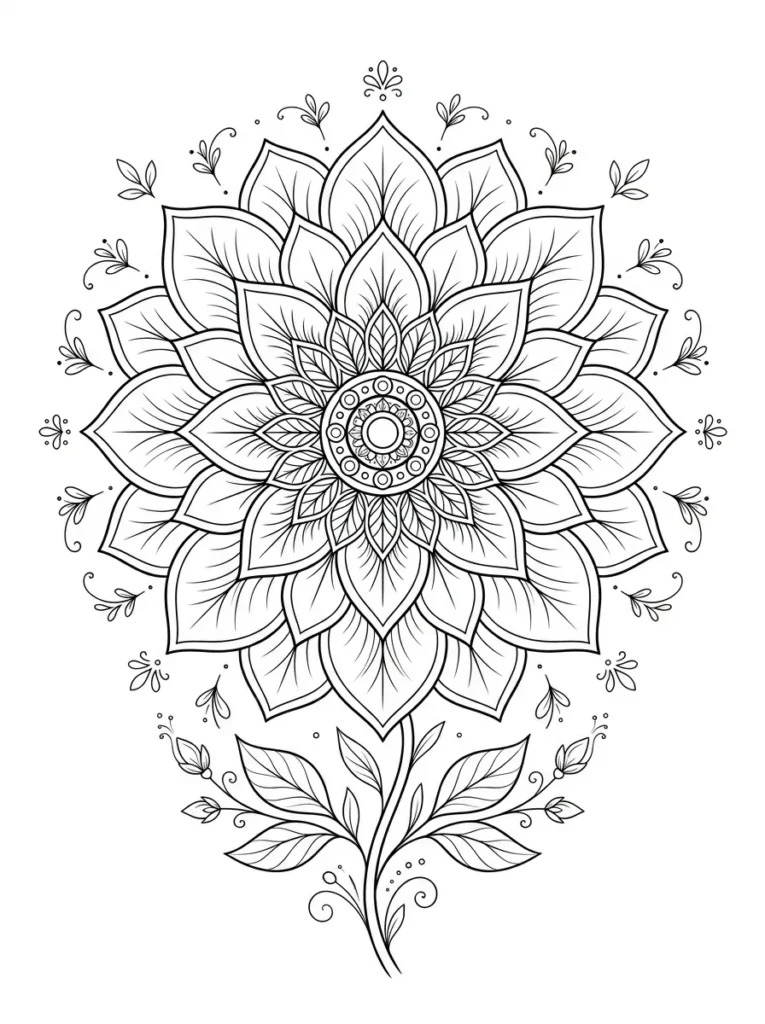
Botanical Flower Symmetry
A perfectly symmetrical bloom where every petal mirrors its partner. Try alternating two colors petal by petal and watch the symmetry do the showing off for you.
Look closely at a real flower and you’ll spot math hiding in the petals — symmetry, spirals, repeating shapes. Kids don’t need the lesson to feel the pull of it. There’s something calming about coloring a balanced flower, and even fidgety kids will sit still for a symmetrical bloom.
They Actually Calm Kids Down
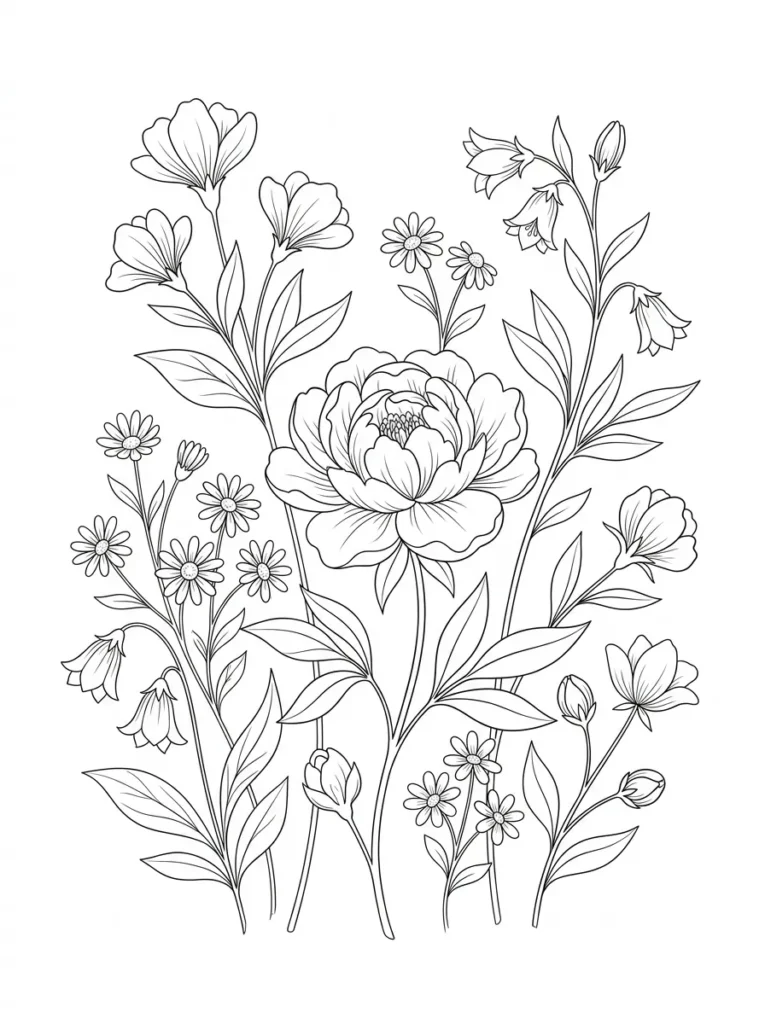
Relaxing Flower Garden
Soft, flowing petals with plenty of open space — made for slow coloring and softer colors. Print this one when the house is loud and everybody needs to come down a notch.
There’s a reason adults buy coloring books full of flowers. The repetitive motion — petal after petal, same gentle curve — settles the nerves like few activities can. When the afternoon’s gone sideways, a flower page and a box of crayons can buy you twenty genuinely peaceful minutes.
They Grow With Your Child’s Skills
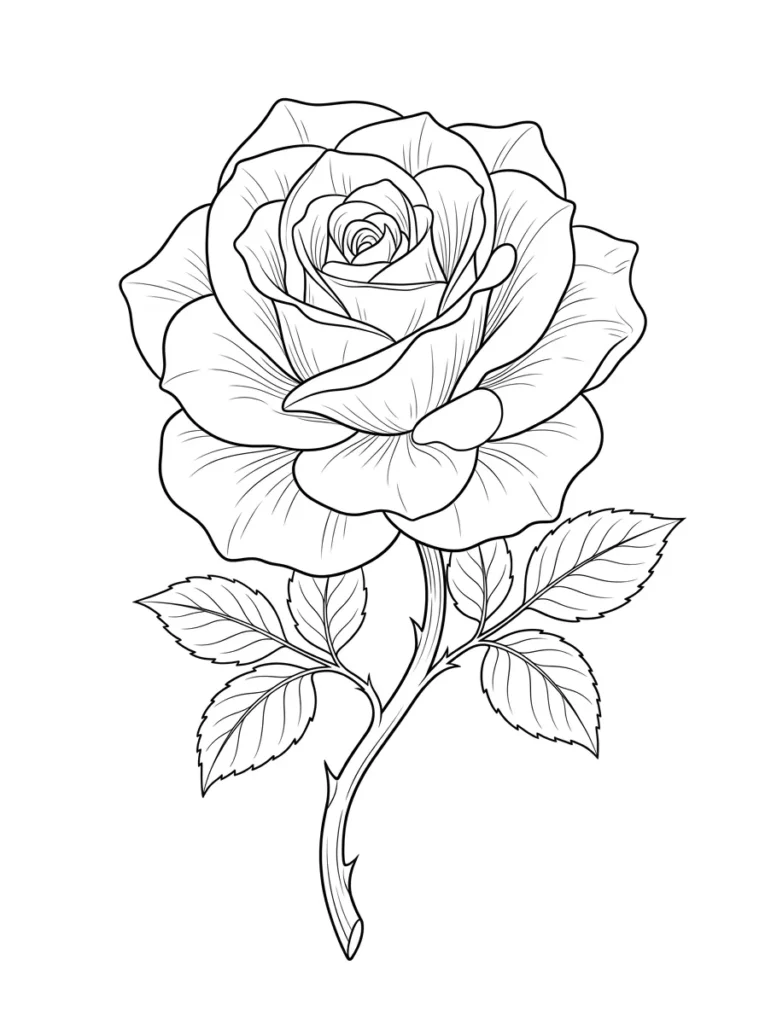
Realistic Botanical Flower
A lifelike bloom with layered petals and fine detail — the step up for kids who’ve mastered the simple shapes. Colored pencils beat crayons here; the detail rewards a sharp point.
A toddler can scribble across a big daisy and feel like an artist. That same kid, five years later, can shade a realistic rose petal by petal. Start simple, and let the pages get harder as their hands get steadier.
Flower Coloring Pages by Style and Type
Some flower pages are quick wins, some are afternoon projects. Here’s how the collection breaks down, so you can grab the right one fast.
Simple Blooms for Quick Wins
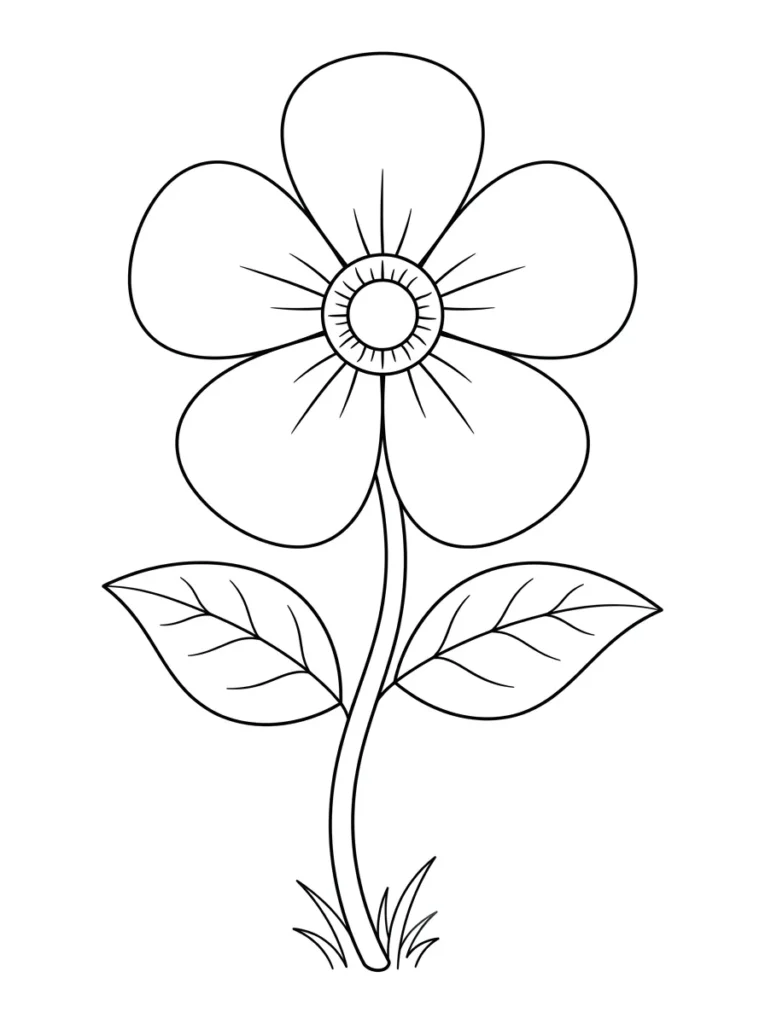
Simple Daisy Flower
One cheerful bloom, big petals, zero frustration — the classic starter page. Perfect for preschoolers, and honest enough that older kids enjoy it as a warm-up.
Single flowers with basic petal shapes are where most kids start. They teach the parts of a flower — petals, center, stem, leaves — without a single boring moment. These are the “just one more before dinner” pages.
Roses and Garden Favorites
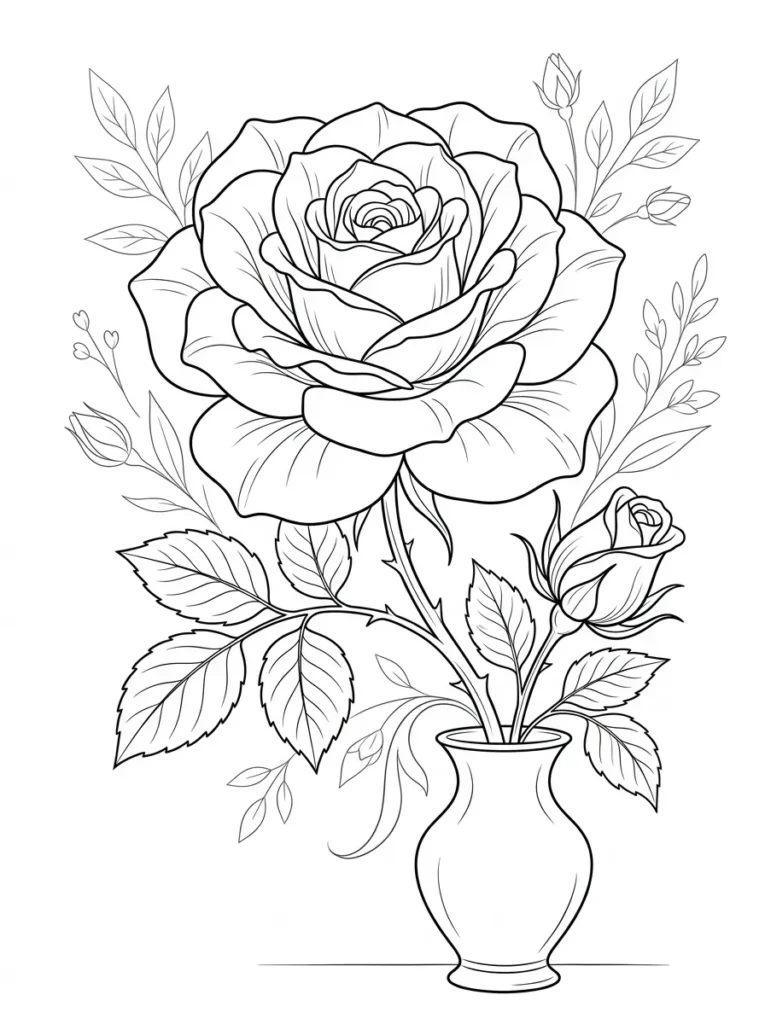
Rose Garden Blooms
Layered rose petals with that classic spiral center — the prettiest shading practice in the collection. Start light in the middle and go darker toward the edges.
Roses are our most requested flower, and it’s not close. The layered petals give older kids real shading practice, and a colored rose page in a cheap frame makes a genuinely lovely gift.
Big, Bold Sunflowers
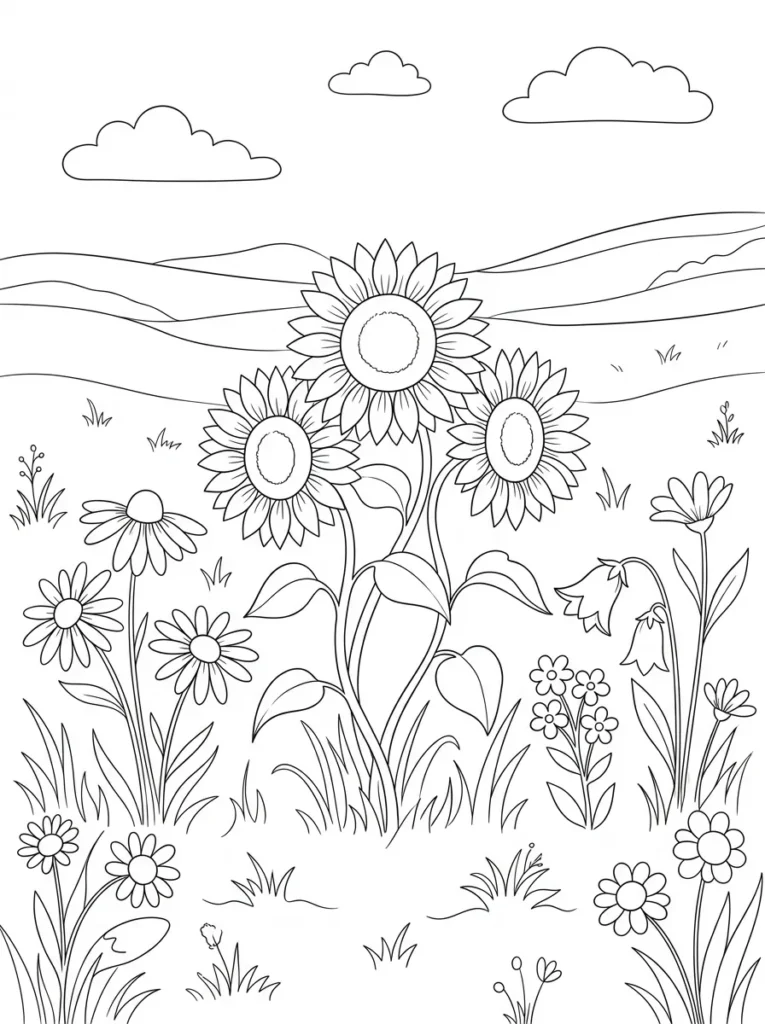
Sunflower Meadow
Tall sunflowers with big seed centers and wide petals — impossible to color badly. The large shapes suit younger kids, while the centers invite stippling or cross-hatching.
Sunflowers are pure joy on a page. The palette basically picks itself — yellow, orange, brown — which makes these great confidence-builders for kids who claim they “don’t like coloring.”
Wildflower Meadow Scenes
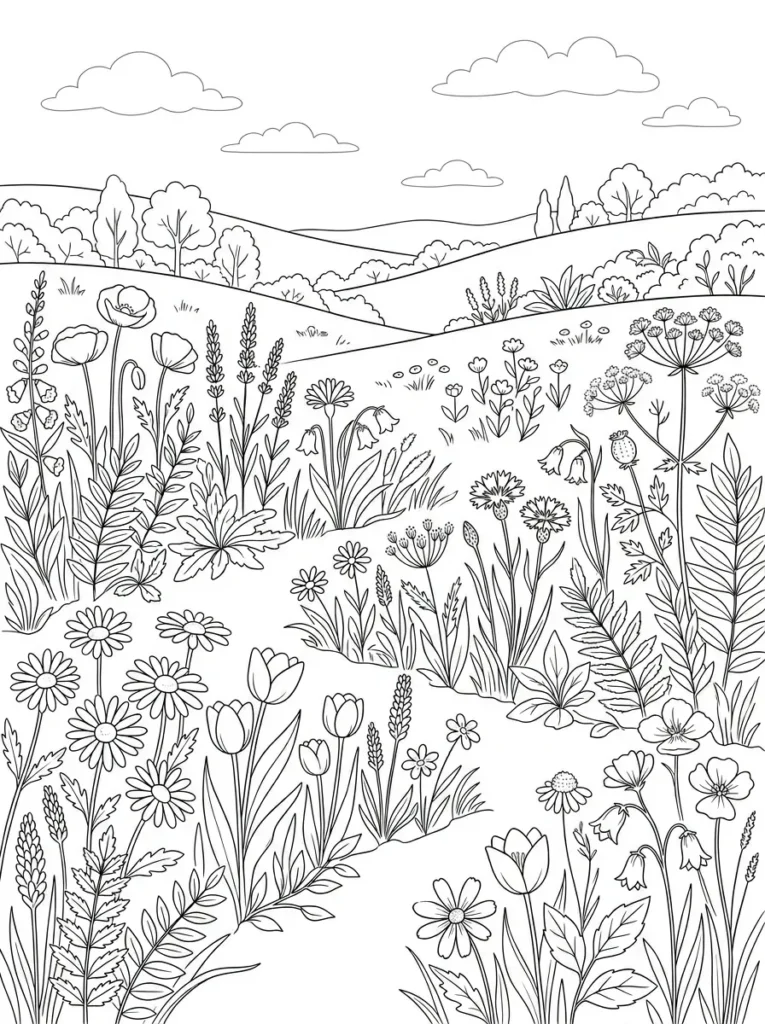
Wildflower Meadow Scene
A whole meadow of mixed wildflowers — the busiest page in this group. Pick a color story first (sunset tones? spring pastels?) and let the meadow fill itself in.
Meadow scenes pack several flower types into one page — more decisions, more color, gloriously messy like a real meadow. Save these for a rainy afternoon when there’s nowhere to be.
Flower Coloring Pages by Age Group
Same flowers, different challenges. Match the page to the kid and everybody stays happy.
For Toddlers, Age 2 to 4
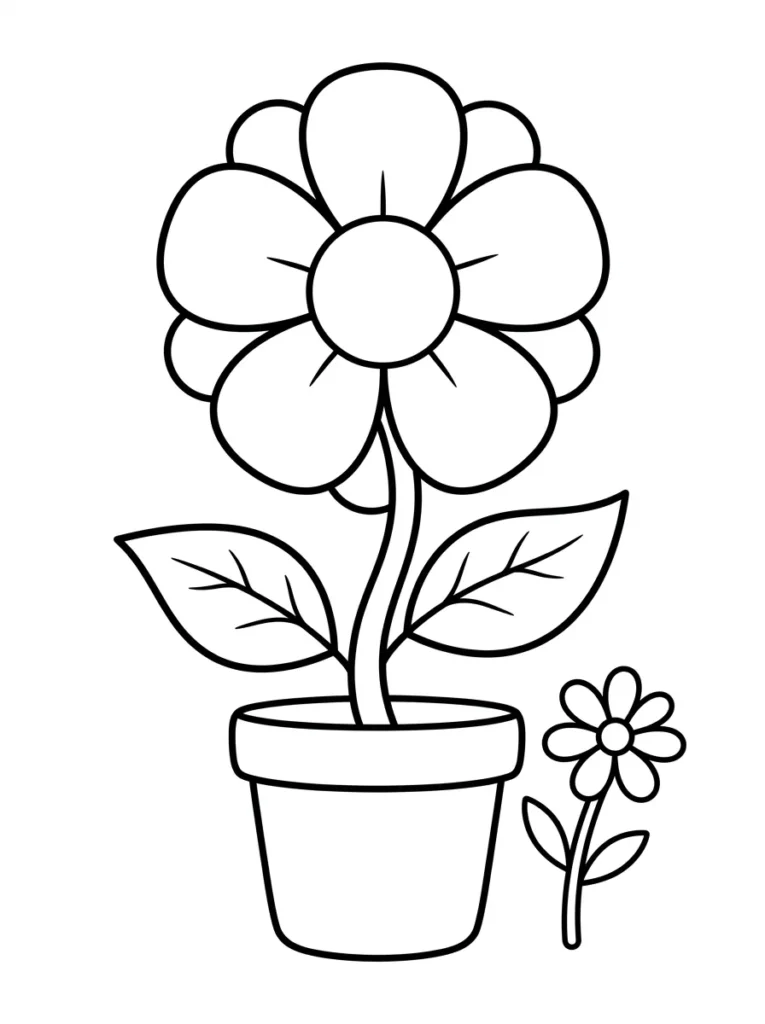
Simple Flower Pot
A chunky flower in a pot with the thickest outlines in the collection — built for chubby crayons and enthusiastic scribbling. Tape up the finished one immediately; the pride is the point.
At this age it’s big shapes, thick lines, and the joy of making color appear. Don’t worry about staying inside the lines — that arrives later, on its own schedule.
For School-Age Kids, 6 to 12
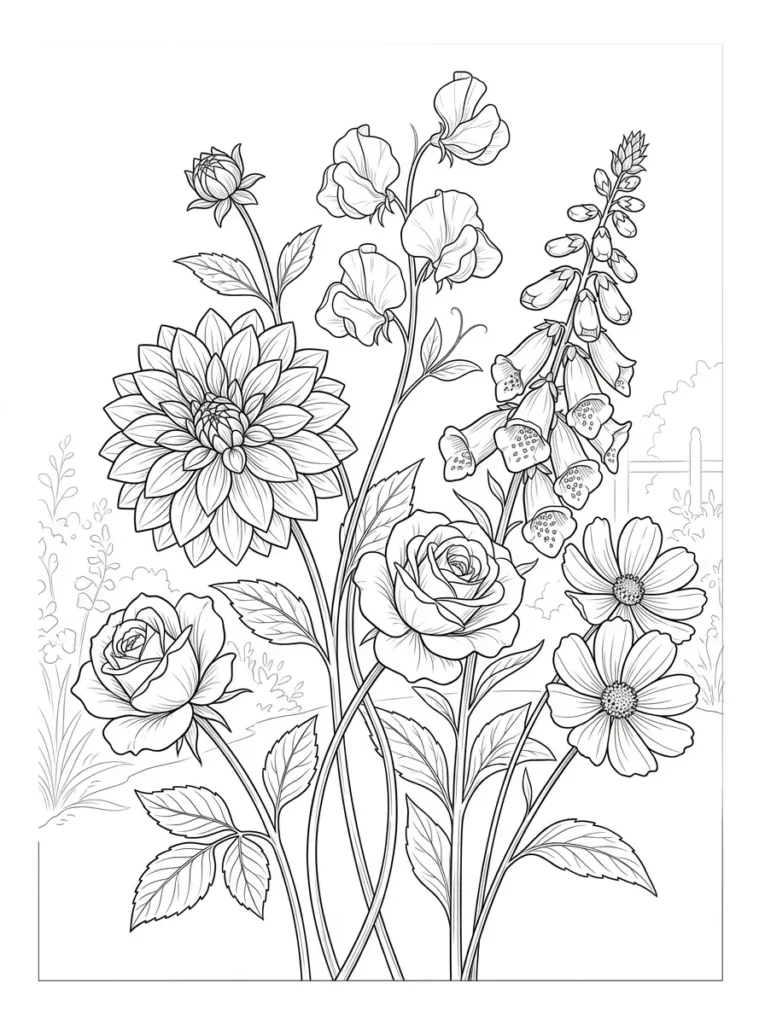
Detailed Botanical Illustration
Fine linework with real botanical structure — stems, leaves, layered petals drawn like a field guide. Best with colored pencils, for kids who like to take their time.
This is where flower pages get serious: multi-flower arrangements and garden scenes that can hold a kid’s attention for a full hour. Many kids this age start caring what real flowers look like — keep a photo handy for reference.
For Teens and Adults
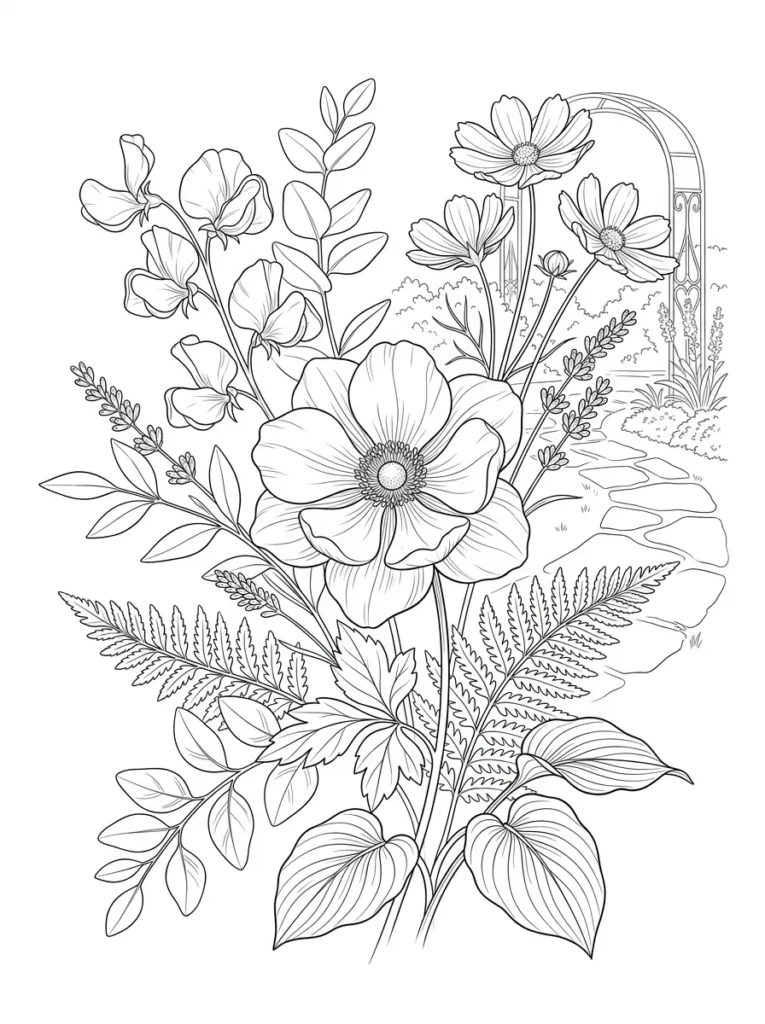
Realistic Flower Arrangement
A full arrangement with several flower varieties at realistic detail — the kind of page people frame. Take it slow and don’t rush the leaves; they’re half the picture.
Realistic botanical illustrations are legitimate art practice, not busywork. Plenty of adults color these to unwind, and the finished pages look good on a wall — no “kid art” disclaimer needed.
Advanced Botanical Studies
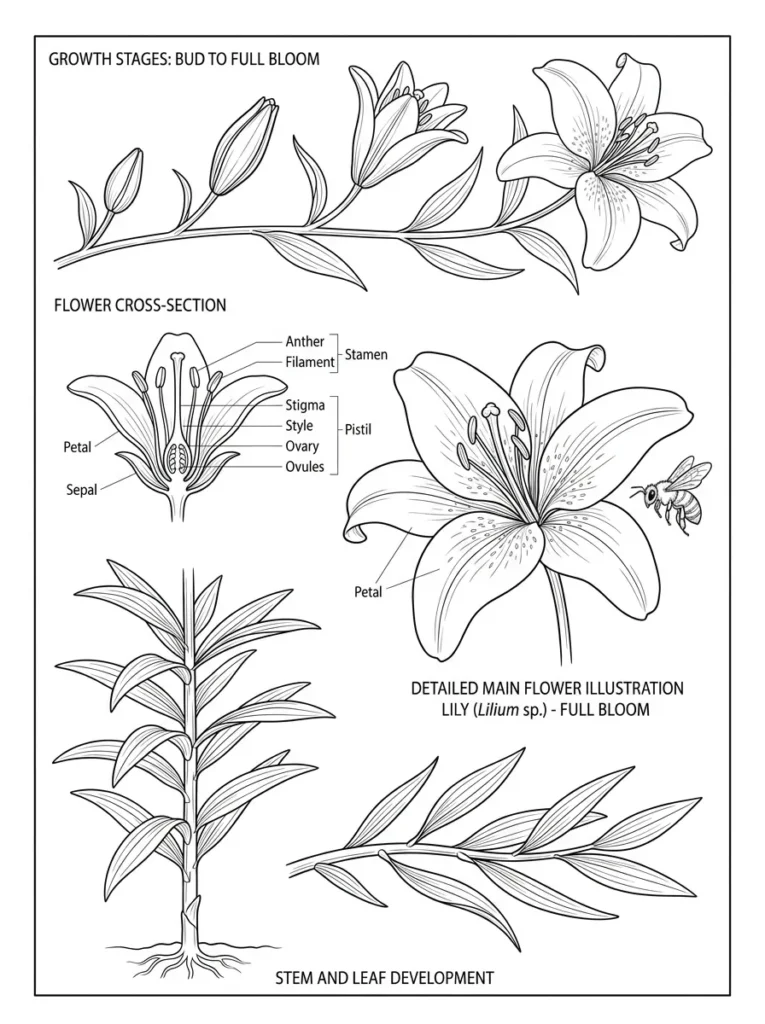
Scientific Botanical Study
A plant-study page with careful structural detail — for the kid or adult who wants to know how flowers actually work. Pairs well with a real plant on the table for comparison.
The deep end: scientifically styled pages with serious structural detail. Plan on more than one sitting — these are illustration projects, not quick wins.
Most Popular Flower Designs in Our Collection
Not sure where to start? The crowd’s favorites:
Roses win by a mile — red, pink, white, yellow, single stems or full bouquets. There’s something about a rose that makes people color it carefully, like the flower demands respect.
Tulips come next. That simple cup shape is instantly recognizable, and a row of tulips in different colors is deeply satisfying to finish.
Sunflowers are the happy pick — big, bold, impossible to mess up. The page equivalent of a sunny day.
Wildflower meadows are for the maximalists: kids who want every color in the box on one page. Mixed species, busy backgrounds, glorious chaos.
Seasonal flowers round it out: cherry blossoms in spring, mums in fall, poinsettias in winter. There’s always a flower in season — and always a reason to come back.
How to Download Flower Coloring Pages
Every design is a clean PDF. No email, no account, no payment screen — click download and the file saves straight to your device, ready to print.
Standard paper handles crayons and colored pencils fine; thicker paper gives crisper lines on the detailed botanical pages. Print at your best quality setting — fine petal details deserve it. Pro tip: print the same page twice and color it two completely different ways. You can also browse our full Free Coloring Pages collection for hundreds more designs, all free.
Best Tools for Flower Coloring Pages
The right tool makes flower pages noticeably better:
Colored pencils are the top pick, full stop. They blend, they shade, they handle tiny petal details. A decent 24-pack covers everything here.
Crayons are still king for little kids — easy to grip, bright, forgiving, and the wax texture looks great on big blooms.
Fine-tip markers give crisp outlines and bold flat color. They bleed through thin paper, so use thicker stock or scrap paper underneath.
Watercolor pencils are the fun upgrade: color dry, brush over with a damp brush, and watch colors melt together. Rose petals love this treatment.
Small Things That Make a Real Difference
Pick flowers you actually like. You’ll color longer and with more care when the subject delights you.
Glance at a real flower first. One look at how petals layer makes your colors far more confident.
Leave some white space. White paper reads as light, and uncolored areas make the colored parts glow.
Display the finished page. Fridge, frame, hallway — anywhere visible. The next page always comes out better when the last one got noticed.
What Is Coming Next in Our Flower Coloring Pages Collection
New flower designs land here every week. Coming up: a garden series covering dozens of species, a seasonal wildflower expansion, flowers with butterflies and bees, and a botanical line-drawing series for the detail obsessed.
Got a favorite flower you’d love to see? Leave a comment. We read every request, and popular ones jump to the front of the drawing queue.
Start Coloring Today
Every page here is completely free — no watermarks, no print limits, nothing between you and the flowers. Print one today, print twenty tomorrow.
And when the flowers are done, there’s more: our Dogs Coloring Pages, Free Cat Coloring Pages, and Free Mandala Coloring Pages are all free too. Find the bloom your heart loves most and start right there.
Frequently Asked Questions
Are flower coloring pages only for kids?
Not at all. Simple blooms suit toddlers, while the detailed botanical pages are genuinely loved by teens and adults. Flowers work at every age.
Are these flower pages free?
Yes — free to download and print, no limits, no sign-up. Print one or print fifty.
What tools are best for floral designs?
Colored pencils for shading and blending, fine-tip markers for crisp outlines, crayons for little kids. If you buy one thing, make it colored pencils.
Can flower pages be used as gifts?
Absolutely — a hand-colored floral page makes a beautiful card or framed gift. Roses are especially popular for Mother’s Day.
You May Also Like
Keep the coloring fun going with these free printable collections: